
Floating Homes
Remarkable Floating Home Communities Around the World
Explore remarkable floating home communities around the world, from Cambodia's Tonle Sap to the splavs of Belgrade, Serbia.
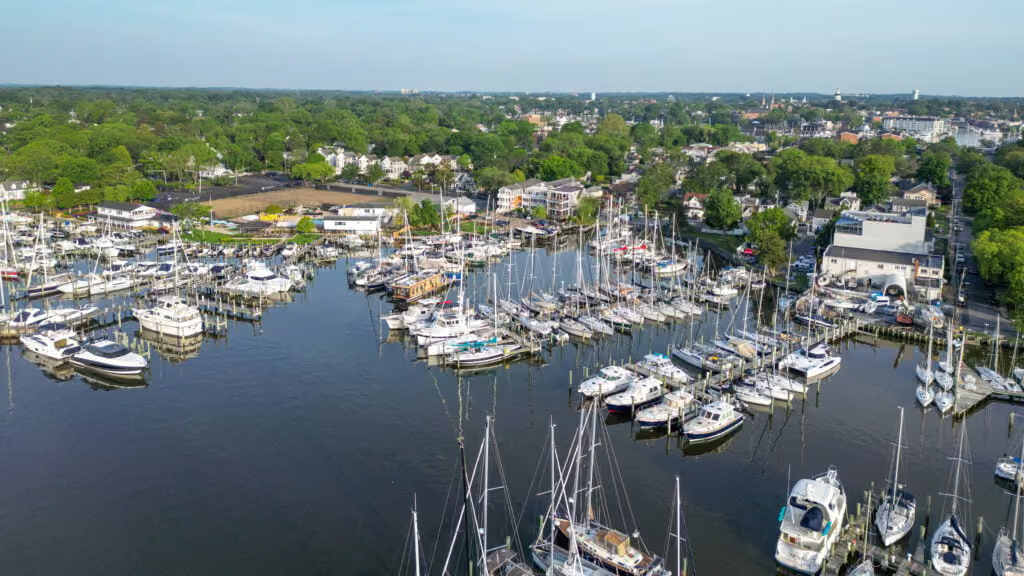
While the conversations about floating homes and houseboats might feel new, they have a very rich history. There's hundreds of floating communities all over the world, and some of them have origins that date back thousands of years! Right here in the United States and elsewhere on the North American continent are many notable floating communities that people travel from all over the world to see. We've rounded up a quick list of some of the most interesting, unique, and historic communities from around the world.
1. Tonle Sap, Cambodia
Tonle Sap is the largest freshwater lake in Asia, expanding to the size of 31,000 square kilometers during its wet season. In addition to the four main floating communities of the vast basin are several stilted villages along the banks of the lake. The communities of Tonle Sap are home to tens of thousands of people, with floating schools, medical clinics, shopping centers and restaurants. Both floating and stilted buildings were created in Tonle Sap as a way to adapt to the hugely fluctuating water levels in the region. It has a thriving tourist industry, with people from all over fascinated by the aquatic lifestyle of the year-round residents.
2. Amsterdam, The Netherlands
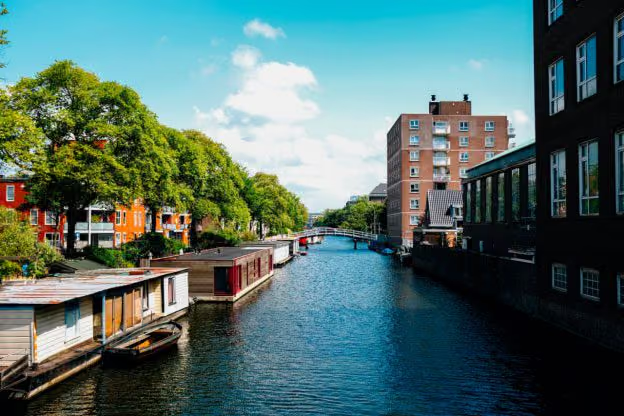
Amsterdam's history has always been centered around water. The city was established in 1250 with the building of its first dam, after which Amsterdam was named: in Medieval Dutch, 'Aeme Stelle Redamme' translates to 'Dam in a Watery Area'. The picturesque canals that mark the Netherlands' capital city are home to some 2,500 houseboats and woonarks (floating homes), many of which are over 100 years old. When life afloat first rose to popularity as a solution to a housing crisis created by the second world war, it was considered a sign of poverty. Today, it costs a lot of money to afford a floating home or houseboat in Amsterdam and many can be seen as a sign of wealth.
3. Sausalito, CA, USA
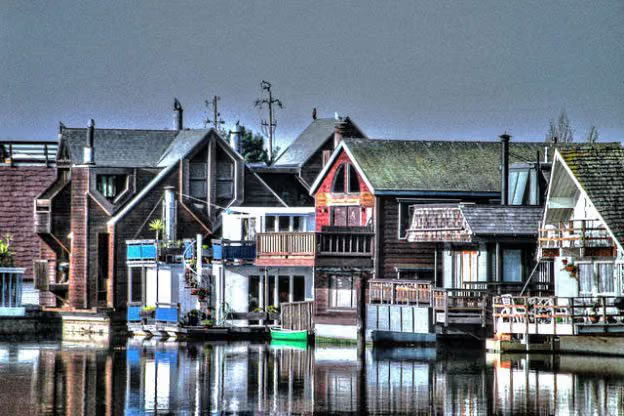
Sausalito, California is home to one of the most recognizable floating home communities in the world, thanks in part to the beatniks and bohemians of the early to mid 20th century who sought a less traditional way of life outside of government regulation and social convention. It all goes back to the SS Vallejo, a houseboat co-owned by surrealist painters Jean Varda and Gordon Onslow Ford and later occupied by the famous British philosopher Alan Watts. A fun fact: Otis Redding wrote the lyrics to his iconic song "(Sittin' On) The Dock of the Bay" while staying on a houseboat in Sausalito.
4. Uros, Peru
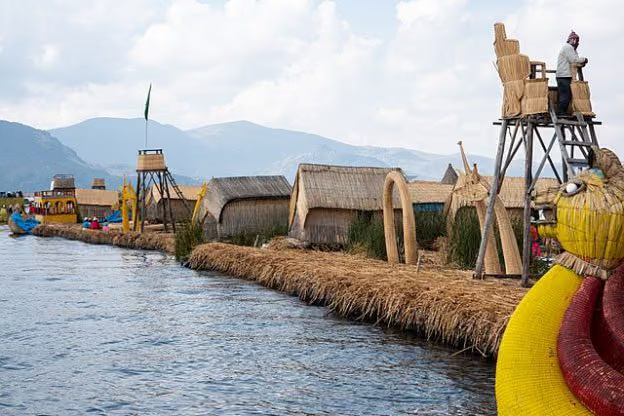
Situated about 5km away from the mainland city of Puno, these floating islets have existed on Lake Titicaca for over 500 years. Named "Uros" after the Indigenous inhabitants who live there, the islands are made entirely from the roots and reeds of the totora plant, which is the lifeblood of the Uros people. Totora is used to build the islands themselves and the homes that sit atop them, in addition to a variety of other applications from medicine to tea and even mattresses. Like many floating settlements, Uros was created out of necessity, in this case, to avoid conflict with invading Inca rivals.
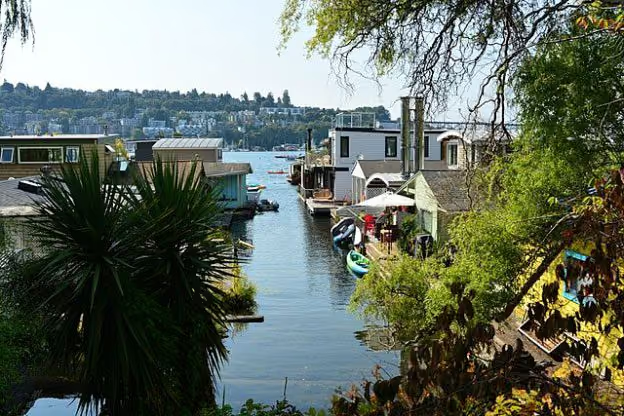
5. Seattle, WA, USA
In the late 1800s, the first floating homes were built to house workers that were living in logging camps. Throughout the early twentieth century, houseboats on the lakes surrounding Seattle were mostly home to folks who worked on or around the water. Wealthier residents began building houseboats on Lake Washington for summer homes in the 1920s, but by the Great Depression more and more Americans who couldn't afford anything else took up this alternative lifestyle as a cheaper way to live. Here again is the recurring theme with the history of floating home communities around the world: what began as a more affordable way to live eventually grew into something of a luxury.
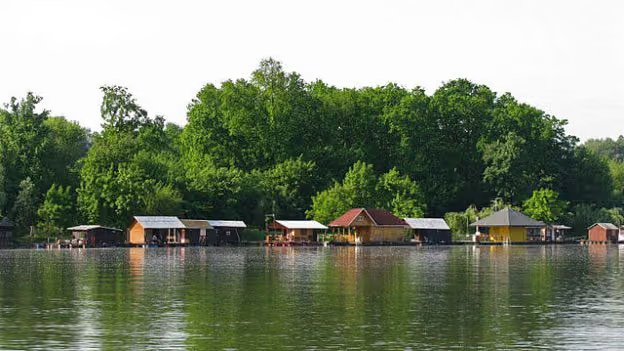
6. Belgrade, Serbia
Serbians look forward to warm weather every year, affectionately calling it splav-season. Splavovi is a Serbian word meaning "raft" or "barge", but it has evolved to take on a new meaning. In the bustling city of Belgrade, the vast array of floating restaurants, bars, shops, and nightclubs are referred to simply as "splavs". Belgrade is world-renowned for its party scene and nightlife, and the splavs are typically at the top of the list. Not all of the splavs on the Sava and Danube rivers are clubs – many are summer or weekend homes for Serbian residents, and today there are reportedly over 600 of these floating homes marking the city.