
Floating Homes
Floating Homes and Houseboats: What's the Difference?
Floating homes vs. houseboats: the key differences in mobility, utilities, taxes, and lifestyle to help you decide which is right for you.
The definitions
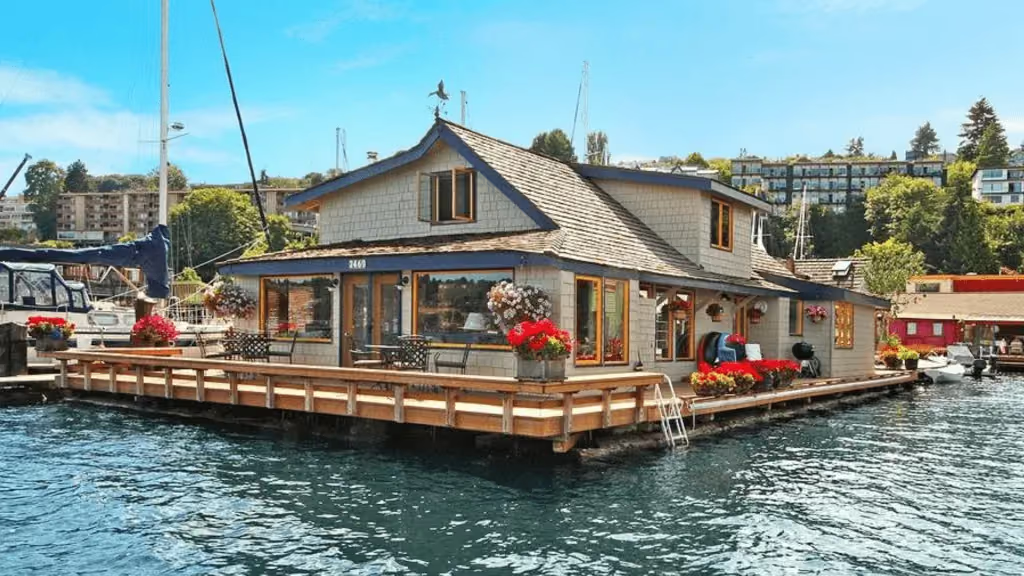
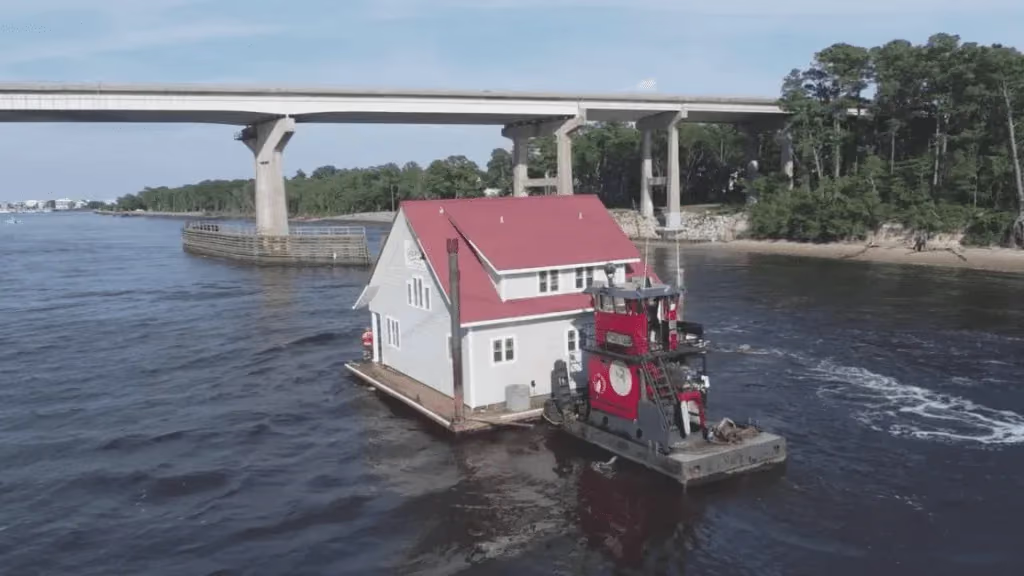
Strictly speaking, a houseboat is defined as a self-propelled, powered marine vessel that is capable of maneuvering on its own. They are traditionally moored in recreational marinas just like any other boat, whereas a floating home is permanently moored and has no means of self-propulsion. Even though a floating home is capable of being moved, it is not considered a vessel.
Which one is better?
That answer turns out to be a matter of personal preference and lifestyle choices. If you're considering investing in one or the other, the better question to ask is which one is right for you? Life on a houseboat means that even if you choose to drop anchor in a single location for a long period of time, you're still free to roam wherever your heart takes you. A floating home is typically either built directly upon its mooring, or it is constructed separately and towed into place. Once in place, it's often the case that the home is permanently connected to the municipal utility and sewer lines. Cable, electricity, and plumbing function just as in your own home on land.
You could think of a houseboat as an RV, whereas a floating home would be a condo. The houseboat has the capabilities of an RV and handles utilities and waste much the same way, and you can cruise the country or set up a more long-term base. Your floating home will likely have fees to maintain its dock and slip, not dissimilar to a condo's HOA dues. A floating home will also be bought and sold similarly to any other dwelling, with standard closing costs and property tax. A houseboat transaction will include a one-time sales tax and no property tax, but you will have to hire a diver to inspect the hull's seaworthiness semi-regularly. Which option you choose will also depend on the laws and regulations of the area you're considering.
What about life on board?

There's an immense variety of both houseboats and floating homes around the world, and with the proper engineering in place, imagination may be the only limitation in regard to design. A houseboat will typically be smaller, with one or two bedrooms at most, furnished for comfort and regular habitation but with a traditional engine room and navigational features. Floating homes are more likely to be larger and distinguished by intentional design features that make good use of the surrounding natural environment, such as floor to ceiling windows or a wrap around deck.
What we really love about floating homes is that you're not giving up anything in exchange for having the most amazing waterview you could ever imagine – they have all of the comfort you're used to. The communities tend to be quieter as well, without any busy streets. Whether you lean toward something mobile like a houseboat or the stationary life of a floating home, in both cases you'll have immediate access to the grand and beautiful outdoors. Your neighbors might be otters, sea turtles, herons, or even dolphins. It's an experience you'll have to see to believe, and we look forward to welcoming you aboard.